Sunday, November 26, 2017

The Power of the Picture Book: Carrie Davies


I Refuse to Rush Him

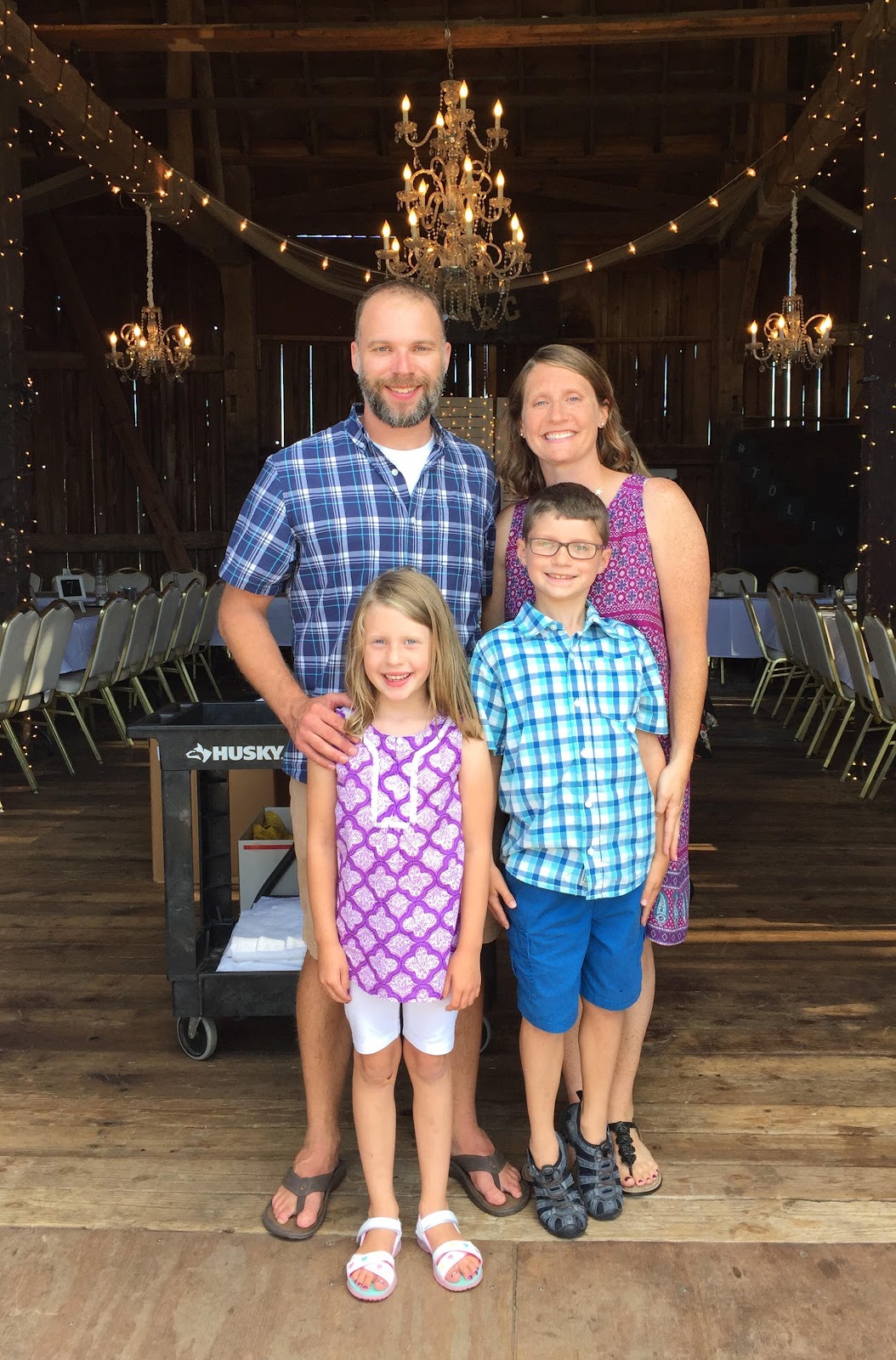
My 9-year-old son is an avid reader, and considers himself so.  He often has his nose in a book, and will talk with you about books, authors and illustrators as readily as he’ll talk to you about Michigan football and ocean life (two of his favorite things).  


He has grown up surrounded by literature.  His mom happens to be a teacher librarian, which means there is a constant flow of books in and out of our house.  Our bookshelves are overflowing to the point where piles of books can be found in just about every room of our house.  


He has been blessed by incredible teachers and a school librarian who have encouraged his love of reading throughout his schooling career.  


He has read and loved many incredible middle grade books, including Peter Brown’s The Wild Robot, Kate Messner’s Ranger in Time: Escape from the Great Earthquake, Jess Keating’s How to Outswim a Shark without a Snorkel, Gary Paulsen’s Brian’s Winter, and Liesel Shurtliff’s Red to name just a few.


He is a confident, capable, 4th grade reader.


So what does any of this have to do with a blog series about picture books?


He is a picture book lover.  He devours picture books more readily than his Halloween candy.  He will often ask me if I have any new picture books he can read.  He treasures signed copies of picture books from his favorite authors and illustrators.  When a new shipment of books comes to the house, without fail, he dives into the stack of picture books first.  He may check out middle grade novels after he’s torn through the picture book pile, but always, always, always, it’s picture books first for him.


And I refuse to rush him out of picture books.
I am more than happy to share, read and talk about picture books with him.  I willingly give in to his requests to bring stacks of picture books home.  When he chooses a pile of picture books to read before bed, I smile and ask if I can join him for a few.


I refuse to rush him out of picture books because of all he could miss.  


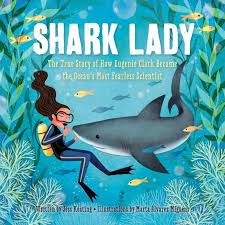
He could have missed Shark Lady: The True Story of How Eugenie Clark Became the Ocean’s Most Fearless Scientist by Jess Keating and Marta Alvarez Miguens, and missed out on the power of learning about an inspirational pioneer in the field of marine biology.

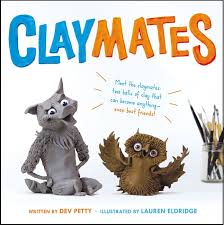
He could have missed Claymates by Dev Petty and Lauren Eldridge, and missed out on seeing the power of creation and storytelling.

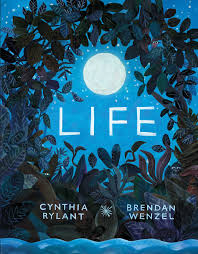
He could have missed Life by Cynthia Rylant and Brenden Wenzel, and missed out on the power and beauty found in the natural world.

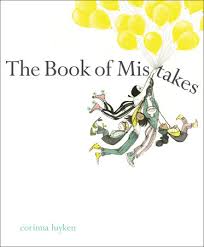
He could have missed The Book of Mistakes by Corinna Luyken, and missed out on the power of seeing the value and gift that mistakes can be.

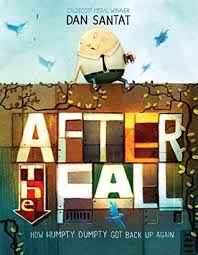
He could have missed After the Fall by Dan Santat, and missed out on the power of overcoming your fears and the power of persistence that lies in all of us.

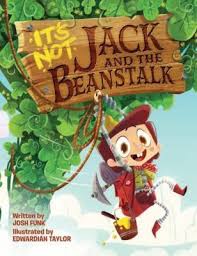
He could have missed It’s Not Jack and the Beanstalk by Josh Funk and Edwardian Taylor, and missed out on understanding the power the narrator has (or doesn’t have…) in telling a story.

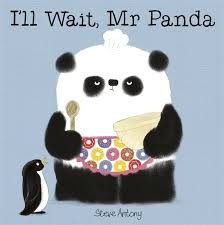
He could have missed I’ll Wait, Mr. Panda by Steve Anthony, and missed out on experiencing the power of being patient and the reward that comes with waiting.  

He could have missed out on these titles that he told me himself are some of his favorite recent picture books and the power that each one holds.


I refuse to rush him out of picture books.


My hope for him, and for my 7-year-old daughter, and for readers of all ages, everywhere, is that they will stay with picture books, now and forever. That they will grow and change and develop as people, and as readers, and will continue to add all types of books to their reading lives; but that picture books will always have a place there, too.  Their lives will be so much richer by the stories each of these 32-page treasures have to offer.


Stories of hope, of joy, of laughter.  Stories of the past, the present, the future.  Stories that challenge, that transform, that inspire.  Stories that are mirrors and windows.  Stories that make them think.  Stories that make them reflect.  Stories that make them question the world around them and their place in it.  Stories that make them fall in love with reading.


Ultimately, isn’t this what we want for our readers? Our students? Our own children?  


Let them stay.  Let them savor.  Let them enjoy.  Let them be impacted by the power of picture books.  

Refuse to rush them out of picture books.


*****

Carrie Davies is a K-4 Teacher Librarian in West Michigan.  She feels incredibly lucky to spend her days surrounded by her two favorite things -- kids and books. She’s married to an avid bike rider, is mom to a 9-year-old soccer player and 7-year-old Girl Scout, and they all live amidst piles of books. You can find her on Twitter at @readwithdavies.

Saturday, November 25, 2017

The Power of the Picture Book: Kelly DiPucchio


I have always loved the word alchemy. It feels like an appropriate word to consider when talking about picture books. One of the definitions of alchemy is “a power or process that changes or transforms something in a mysterious or impressive way.”

From my perspective, picture books are alchemical wizards that take on a life of their own. Although try explaining that to your seatmate on an American Airlines flight from Detroit to Omaha when they ask what you do for a living. Many people outside of the kidlit community aren’t even aware of the secret power of picture books. Their ability to transform, to transmute. To make gold.

Over the years I’ve had the privilege of witnessing the power of picture books first hand through my own books. I once received a letter from a mother in New Zealand telling me her son had been afraid to go to sleep at night because their neighborhood had suffered much destruction after a strong earthquake shook their city. She went on to say that my picture book, CLINK, gave her son tremendous comfort and it was the only story he wanted to read at bedtime because the robots distracted him from his fear of the aftershocks.

When I first began writing for kids over twenty years ago, never in a million years could I have envisioned a real little boy halfway around the world reading a book I wrote, yet alone one that might transform his fear into joy.

I certainly never envisioned Grace for President creating a movement of sorts, one that has spanned nearly ten years.

Where are the girls?

I’ve met them. All over the country.

Girls like Kenya in Missouri who wrote in her letter to me, “Your book makes me want to be president, too.” 


That’s the power of a picture book!

But here’s the thing. Picture books don’t just change readers. They change the authors who write them.  They change the artists who illustrate them. They change the editors who publish them. 

Picture books can, and do, have the power to change the world. But not through policies, or treaties, or summit meetings. Picture books change the world through unconventional, stealthy means.

Extra-long necks. 


Fishy breath.


Spoooooky donuts.


Brilliant, artistic, wordless literature.


Fuzzy, little butts.


Paper airplanes.


Diving boards.

 
And beautiful salads, with croutons and a light vinaigrette.


Every picture book, whether it’s shared on a lap or in a library, creates a ripple effect we cannot often see. Sometimes the ripples are big. Sometimes they’re small. But always, always a picture book is a catalyst for change.

That’s alchemy.


That’s gold.


*****

Kelly DiPucchio is the New York Times bestselling author of twenty-five picture books. Some of her award-winning titles include, GRACE FOR PRESIDENT, GASTON, and SUPER MANNY STANDS UP. Kelly has been a featured speaker at numerous conferences such as ALA, IRA, and NCTE. She lives with her family in southeastern Michigan. You can find her on the web at www.kellydipucchio.com

Friday, November 24, 2017

The Power of the Picture Book: Brian Wyzlic


Picture Books, Teenagers, and Tears

Quick: tell me the last time you were in a room full of teenagers and the majority present were crying. Oh, and it’s a room of freshmen, an even mix of boys and girls. And they just took a final exam and want nothing more than to get going with their summer.

Not. . .generally a time for tears.

Enter the picture book.

This past school year, I had the pleasure to teach an amazing group of young men in women in my 9th grade English courses. We read together. We wrote together. We laughed together. We shared our ups and downs together. We grew together. We learned together.

But we only cried together twice.

Once was in January, as we were reading a handful of 2016 picture books so they could be informed voters when it came time to choose their book award winners at the end of the month. They decided that they had to include picture books in the list of award categories. I certainly wasn’t going to get in their way.

Do you remember 2016 picture books? My students and I will remember one in particular: Ida, Always by Caron Levis and Charles Santoso. This, our runaway award winner, is the quiet, unassuming story of two polar bears at the zoo: Ida and Gus. Then Ida gets sick. And she’s not getting better. My spine is tingling and my eyes are tearing up just thinking about this book and how carefully and beautifully it talks about death and dying.

25785760

When we finished the last page of this book, the room was completely silent and still, save for the tears running down our faces. I heard a couple muffled sobs, one of which was from a typically stoic young man whose grandpa had passed the previous summer. A box of tissues was passed around like it was a life preserver. The conversations we had were deep. The text-to-self and text-to-world connections abounded. The discussion of craft, word choice, and even comma placement was beyond that of any other shared read we had that year -- and we had read Homer, Shakespeare, Lee, and Steinbeck.

The picture book held power that we hadn’t experienced in any other format.

The second time we cried together was at the end of the year. The students had known for a few weeks that I wouldn’t be returning to the school, as my family was moving halfway across the country. It was a tough few weeks. I truly loved those students, and they seemed to like me.

So on the last day, after they had finished their exam, we had a little celebration. Someone brought in cake, we had snacks, and just enjoyed each other’s company one last time.

Then, it was time to bring out the picture book. I wasn’t sure which one to choose. Oh, the Places You’ll Go! Is a good one, but they all knew it already. I thought of revisiting some of our favorites from the course of the year. But I settled on one they maybe didn’t know. I chose I Wish You More by Amy Krause Rosenthal and Tom Lichtenheld.


If you don’t know this book, go find it and read it. If you don’t know of the life of Amy Krause Rosenthal, start with this website and follow any of the links from there.

What you need to know now, though, is that this book perfectly summed up the feelings in the room in a way that no other text could. The poem that is the text and the illustrations that bring it to life freed us to feel the emotions our words could not express. When I finished, as tears were flowing, a young man stood up in the back of the room and said, “Do you need a hug?” I did. We all did. And so we hugged. And we cried.

These moments are among my favorites of the year. They were raw. They were emotional. They were real. And they were brought out by seemingly the most unassuming of things: a picture book.

So, to all those who create picture books, on behalf of all of us lesser humans: we need the work you create. Thank you. Thank you. Thank you.


*****

Brian Wyzlic is a former classroom teacher from Michigan-turned-Education Technology Specialist in Brandon, Manitoba. He believes in the power of the human connection to be the catalyst to positive change. Pictures books, certainly, have a powerful role in that. He tweets at @brianwyzlic and can usually be found with his wife, chasing their 2-year-old around the kitchen, while their 7-month old watches and laughs.

Wednesday, November 22, 2017

The Power of the Picture Book: Jess Keating


BLOBFISH’S FAVORITE PICTURE BOOKS 
(written by Mr. Blobby)

Hi. I’m a blobfish. My full name is Psychrolutes marcidus, but you can call me Mr. Blobby. Or Blob, for short. You might have read about me in this cool book called Pink is for Blobfish. I’m not used to getting much attention (being that I live 3000 feet deep in the ocean), but I must say I took to it quite well. Did you know that some kids think I’m actually cute?


This made me very happy to hear.

Being in a picture book made me wonder: what other picture books are out there? It’s not easy to get a hold of books in the ocean, but I asked around and borrowed some from my friends. I am very lucky to have such wonderful friends. I wanted to share them with you today, if that’s okay. As a blobfish, I don’t get to travel too much. But picture books let me travel anywhere I want! Here are five books that I think you should read.


Can an Aardvark Bark? by Melissa Stewart


As a blobfish, I don’t get to hear many noises. Mainly just gurgles, grunts, and the odd squeak. But this book made me think about all the other noises that my fellow animals can make. After reading it, I tried to bark like some of the animals in the book, but it came out as more of a bubbly-hiccup. Oh well. I really love the pictures in this book too!


Little Fox in the Forest  by Stephanie Graegin


This book surprised me so much! Did you know that not all picture books have words?! Amazing. Blobfish especially appreciate wordless picture books, because pronouncing words can sometimes be hard for us. I had so much fun following this story through all the pictures! I’ve never met a fox before, or any human children, but this book made me think they are delightful.


She Persisted  by Chelsea Clinton


I don’t know who Chelsea Clinton is, but she sure seems amazing. This book taught me so much about humans, especially humans known as girls and women. They face so many obstacles, but are so strong! I want to meet amazing women like this one day. Persistence is so important, whether you’re a human or a blobfish, and this book left me feeling like I could conquer the world.


If Sharks Disappeared  by Lily Williams


I have to admit, I wasn’t so sure about this book. I see sharks swimming around my home quite often,and they look so scary to me! Those teeth and dark eyes! But this book changed my mind. I learned what the world and oceans would be like without them—that scared me even more! We really do need sharks to survive and be healthy. Because of this book, I, Mr. Blobby, hereby swear to stop judging sharks so harshly. (Though I will always give them a wide berth if I see them.)


Where Oliver Fits  by Cale Atkinson


This story made me feel so happy, and I think it’s because it got me thinking about where I fit in the ocean. As a blobfish, I sometimes feel different from other fish. Like I don’t fit in. The main character of this book feels the same way, but he showed me that I don’t need to change myself to find my place. I loved it, and will be recommending it to all my blobfish friends, and anyone else who is still finding their place in their world. (I also love the bright colors in this one—they really cheered up my home!)


Thank you for sharing your time with a blobfish today! I’d love to know what picture books you’re reading, and what you think I would enjoy. Please let me know!

Have a happy day!
-Mr. Blobby


***** 

Jess Keating is the author of several acclaimed books for kids, including the My Life is a Zoo trilogy, The World of Weird Animals series, and Shark Lady. She also publishes a free monthly e-zine for children, The Curious Creative, which combines her love of science and creativity. You can learn more about her at www.jesskeating.com, or tweet her @Jess_Keating. 

Tuesday, November 21, 2017

The Power of the Picture Book: Nancy Paulsen


I adore picture books – they are a 32 page art form that offers an eye-opening slice of life. They can do all kinds of things to the beholder; they can captivate, provoke and amuse. Throughout my years as an editor I’ve been lucky to work with so many fabulous picture book writers and artists, and here are a few of my all-time favorites (and they are all still in print, woohoo!):


Leaves – evokes: joy

This simple, joyful story of a small bear’s first experience of seasons is perfectly written -- it won the Ezra Jack Keats Award for its splendid short text. It begins: It was his first year/Everything/was going well/until the first leaf fell/“Are you okay?” he wondered.

I love how David Ezra Stein’s book reminds us of a time when everything was new and to see the world with fresh eyes. The expressive little bear does that and we just want to share in his wide-eyed wonder!


Five Little Gefiltes – evokes: laughter

Oy I love this book!
Five curious little gefilte fish have the chutzpah to leave their mama and go out and explore their world (the deli scene is hilarious!). But these little wanderers are sweet enough to come back home at the end because they love their mama! “Mama Gefilte sat on a bench/and the gefiltes came back ‘cause each was a mensch.”

I am kvelling like Mama Gefilte by the end of this book! Thanks for the laughs and the Yiddish words, author/artist Dave Horowitz!


Fireboat – evokes: perspective

The inspiring true story of the John J. Harvey— a retired New York City Fireboat that was called into service on 9/11 – celebrates the energy and hope of a city and its people. The book begins in 1931 when the fireboat and Empire State Building both were built. It gives us a glimpse of a city that that has been around a long time and that pulls together in times of crisis. It is a heartbreaking celebration of resiliency.

Maira Kalman has written a classic book for our times in just the right tone to introduce picture book readers to New York and 9/11.


Each Kindness – evokes: empathy

Chloe and her friends won’t play with the new girl; and sadly, by the time Chloe realizes her mistake, Maya has moved on. This is a story of a missed opportunity to be kind, and even though some feel the ending it harsh, so is reality. I like to think of it as a book that gives the reader the opportunity not to make Chloe’s mistake – because you know that Chloe is not going to make it again either. 

This book is such a great conversation starter. Jacqueline Woodson’s spare, elegant text and E. B. Lewis’s shimmering, impressionistic art provoke readers and reminds them that they have the power to be kind and that each kindness makes the world a little better.


Miss Maple's Seeds –evokes: appreciation

Miss Maple is a nurturer. She is the size of a bird and lives in a tree and makes sure every seed has a chance to reach its full potential. Miss Maple’s world is captivating! The art is enchanting with its rich palette of burnt oranges, warm golds and peacock blues. Flower lantern boats, snug treehouses and miles and miles of gorgeous landscapes, and especially seeds that grow into glorious trees, reminds us that nature is truly magical!

The experience of entering Miss Maple’s world is what a good picture book is all about – bravo Eliza Wheeler! It’s enchanting, eye-opening and inspiring. I will leave you with the words of Miss Maple: “Take care my little ones, for the world is big and you are small. But never forget that even the grandest of seeds had to grow up from the smallest of seeds.”


*****


Nancy Paulsen is the President and Publisher of Nancy Paulsen Books, an imprint of Penguin Young Readers. The imprint publishes fifteen books a year and focuses on eye-opening, often funny picture books and middle grade fiction from diverse and distinct voices, especially stories that are inventive and emotionally satisfying. A few of the New York Times bestsellers she has edited include National Book Award and Newbery Honor Winner Brown Girl Dreaming by Jacqueline Woodson, Fish in a Tree by Lynda Mullaly Hunt, and Miss Maple’s Seeds by Eliza Wheeler. She’s on Twitter @nancyrosep 

Monday, November 20, 2017

The Power of the Picture Book: Kristen Picone


Memories of the Heart


A picture book for some is just that...a book with pictures. Something for babies and young kids to enjoy. But for many of us, a picture book is so much more. A work of art, a delightful marriage between text and image, something to pour over and savor. Picture books provide memories. As Megan Dowd Lambert says in Reading Picture Books With Children (2015), “...I know that we carry picture books about with us, not just as physical objects in our hands with pages that we turn, but as remembered experiences with stories and art, and with each other.”  Through picture books, we can see ourselves, learn about the world outside of ourselves, and revel in the work of talented artists. Reading a picture book should be an experience...a memory.

I have used picture books in my classroom since I first began teaching in 2001, but, more recently, picture books have become the foundation--the heart, the soul--of our classroom community.  We reach for them when we need comfort, they help us celebrate diversity, they make us laugh, they make us cry, they help us feel seen and gain new perspectives. In every way, picture books guide our learning journey. Whether the picture books we read are part of reading or writing lessons, our Mock Caldecott Unit, or read simply for the joy of sharing a book together, the books create an experience...a memory.

Many of my 5th graders come to me thinking that picture books are not for them anymore.  They think they have outgrown them. We start our year talking about our reading lives, and I share how proud I am of my always-growing picture book collection. I let them know that I buy these books for me, because there is no age-limit on a picture book, and that my favorite thing to do is share them.  On the first day of school this year, when I told my students that we read 180 picture books last year, they looked at me wide-eyed and someone said, “Let’s read 181!”  Between #classroombookaday, Reader’s and Writer’s Workshop, content-area lessons, Mock Caldecott, and Battle of the Picture books, the students in room 214 will experience over 200 picture books.  And each book will be an experience...will provide a memory of the heart.

In Disrupting Thinking (2017), Kylene Beers and Bob Probst remind us WHY we read (and write): “If we aren’t reading and writing so that we can grow, so that we can discover, so that we can change - change our thinking, change ourselves, perhaps help change the world - then those skills will be for naught.”  When Kurt asked me to write this post, I kept reflecting on these words and thinking, Have these picture book experiences resonated with my students? Have they changed their thinking, changed them, in any way?  The only way to find out was to ask the kids!  What follows are the responses from students that I taught last school year.  What shocked me most were the similarities in their reflections, considering the only prompt I gave them was to write a few sentences around the theme “the power of the picture book.”  Here are their experiences...their memories:


To me, picture books are important because they can bring you into a different world. Some people think that picture books are for babies, but what they don’t realize is that there are a lot of deep messages that children will get when they explore the picture book universe. Picture books can make a topic that is hard to understand, easier to understand. For example, the book The Youngest Marcher, by Cynthia Levinson is a book about a child protester that got arrested during the Civil Rights Movement. While that might be a hard topic for a child to think about, the picture book made it clear and understandable. Picture books are smaller than novels, but you know what they say...good things come in small packages! - Jeremy


Picture books may not be big in size, however, they are huge in meaning. A lot of picture books have great lessons. One example is The Story of Fish and Snail, by Deborah Freedman. This book is about taking risks and trying something new. Fish is ready to leave their book, but Snail is not sure if she wants to step outside her comfort zone. Snail finally decides to leave their book and loves it. You get this giant message from one tiny book.  Some people don’t even realize how powerful picture books are. This shows there is a lot of power in a picture book. I love reading picture books because they have very powerful messages. - Kelly


The best thing about a picture book is that all ages can enjoy it. Younger children may like the pictures, while older people will understand the theme better. This is the case in Unicorn Thinks He’s Pretty Great, by Bob Shea. Little kids will love the pictures, particularly the scene when Goat puts the plunger on his head, or when Unicorn makes it rain cupcakes. Older kids and adults can understand that there is more than one theme, including that other people may realize and admire your talents, even if you don’t. - Sierra


Picture books are powerful. They describe life lessons and teach you things you did not know. For example, Shark Lady: The True Story of How Eugenie Clark Became the World’s Most Fearless Scientist, by Jess Keating, and Swimming With Sharks, by Heather Lang taught me about Eugenie Clark and showed that sharks are fascinating and the women can be anything they want to be. - Sean


You are NEVER too old for picture books. Picture books are very powerful because each of them has a special message that’s hidden between the lines.  They can stick with you for the rest of your life, whether you realize it or not.  For example, one of my favorite picture books is We’re All Wonders, by RJ Palacio, because this book has beautiful illustrations along with amazing writing. This book’s message is “Don’t judge a book by its cover”, which may be a little cliche, but is very true. That’s only one example out of dozens of picture books that have stuck with me in a positive way. So just remember, no matter how old or young you are, or how silly or educational the book is, you are never too old for picture books. - Holly


Picture books are meant for anyone and age. Even though it seems like they are just for younger children, older children or even adults can take a lot out of them.  Younger children look at the pictures to understand the story. Older children and adults understand what the author is trying to teach you when they correlate the picture with the story. My favorite picture books are the Elephant and Piggie books, by Mo Willems.  They are entertaining for younger children by including large, colorful pictures to tell the story but to older children they can learn about friendship, caring, and acceptance. With the power of picture books there are many life lessons to learn no matter what age you are. - Sophia


The power of the picture book is extraordinarily significant to children since they teach about lessons and morals. For example, Each Kindness, by Jacqueline Woodson teaches kids a powerful anti-bullying and kindness message. Kids will learn to be respectful and courteous toward others and to not judge people by the way they look. Children can learn life lessons that will take them far in life. That is...the power of the picture book. - Ryan


There is so much power in picture books. So much power that kids don’t even know about. My favorite picture books ever are Explorers of the Wild and To the Sea, by Cale Atkinson.  They are my favorite picture books because in To the Sea, no one really saw Tim. But the whale, Sam, got lost and no one else noticed Sam, until Tim. I felt like Tim and Sam had an extremely powerful connection. In Explorers of the Wild, the boy and bear keep rotating pages. They both love to explore and find new things in the wild, but when bear and the boy separate their connection reaches so far, they realize they will always be together at heart. - Garrett


Many people think there is no need for picture books for older kids, but they have deeper messages and more of an impact on readers than people realize.  Picture books translate strong topics into a book that makes many messages easier for EVERYONE to understand. Others also think that they are made just for entertainment, which is true, but they also teach meaningful lessons using characters as examples. A book that teaches a lesson is The Story of Fish and Snail, by Deborah Freedman.  This book shows how Fish wants to explore while Snail is comfortable where he is and isn’t willing to try new things. Eventually, Snail becomes lonely and looks for Fish. He realizes he likes this new adventure. This teaches readers to try new things in life. As you can see, picture books really do have power and a deeper message behind the cover. We learned that in 5th grade after reading over 180 picture books!  - Bryan and Kyle


A picture book holds a lot of power.  It can hold a strong theme that can stick with you over a long period of time. It shows you in just a few short pages something that you might use in your life over 50 years later. An example of this is Be a Friend by Salina Yoon.  This book’s thematic statement is that you are never alone and there is always someone there for you. Picture books are very powerful and you are never too old for them. - Brooke


A favorite book of mine is Blue Chicken, by Deborah Freedman.  Even though we read it for “fun” we were still able to make connections and see life lessons.  I like picture books as a link to what else is to come and the variety of styles lets me learn in different ways. I would rather read a handful of picture books of different styles than a chapter book that doesn’t hook me. - Lauren


I really love picture books because they bring the story to life.  When I read If I Built a House, by Chris Van Deusen,  I could really see myself jumping into the ball pit from the trampoline.  After I finished the book I started to draw my own house and all the fun things I would put in it. - Thomas


A picture book is more than pictures and words on a page. It’s not just to look at the pictures and stare at it blankly. It’s a piece of art, it has a lesson, it has a meaning. It could lead you down your path in life. Take Each Kindness, by Jacqueline Woodson, for example. The main character, Chloe, had a new girl, Maya, come to her school. Chloe and her friends acted like Maya was a nobody. They laughed at her. They were bullies. One day, Maya’s seat was empty. That day, the teacher brought in a huge bowl of water for an activity about kindness. When someone dropped a pebble in the water, tiny waves rippled. The teacher said “Each little thing we do goes out, like a ripple, into the world.” When they dropped the pebble in, they had to say something kind. When it was Chloe’s turn, she couldn't say anything. All she thought about was how she treated the Maya. Days passed and Maya didn’t return and Chloe realized she wouldn’t have the chance to ever be kind to her. That right there is why you should always choose kind. That is why picture books are so much more powerful than just simply pictures and words on a page. “A picture book is a small door to the enormous world of the visual arts, and they’re often the first art a young person sees.” (Tomie dePaola) - Owen


These students read the books they mentioned over a year ago. They had no trouble drawing upon titles, remembering authors’ names, recalling the joy of sharing these books together, and thinking about the lessons learned.  In time, they may forget some of the details of the books they have read, but they will always remember how the book touched their minds and their hearts. One of my most important jobs as an educator is to open children’s minds to the power that picture books can have on all of us, young and old alike. I will forever be grateful for the countless picture book authors and illustrators that have provided us with these reading experiences...these memories of the heart.

As Kylene Beers and Bob Probst said, “We read to become more than we knew we wanted to be.”  Picture books have changed these children, they have changed me, and can change the world.

*****

Kristen Picone is a self-proclaimed book nerd, always has been and always will be.  She teaches 5th grade ELA/SS in Kings Park, NY, in a classroom that is filled to the brim with MG novels and picture books.  Teaching is not just her job, it’s her passion! When she isn’t opening boxes of new books that have arrived on her doorstep, she can be found planning for the next nErDCampLI, or lost among her many TBR towers.  Reading picture books to kids of all ages is Kristen’s absolute favorite thing to do, particularly snuggling up and creating memories of the heart with her favorite book-loving 8 year old. She is incredibly grateful for her nerdy PLN, who have helped her learn and grow in ways she never imagined. Kristen can be found on Twitter at @Kpteach5 or through her class account at @KPStars5.  She often tweets book recommendations using the following hashtags: #nErDCampLI and #BookJourney.